Showing posts with label Technology. Show all posts

Monday, October 20, 2008

Web2.0 vs. TV...(hint: TV won't win!)

An interesting insights and short talk by Clay Shirky (author of Here Comes Everybody) at Web2.0Expo explaining how the participatory web is shaping how we're using our surplus time. He makes a great argument on how TV just no longer "gets it".

Tuesday, July 31, 2007

Simple tools--removing technology from the picture


I read a post this evening from a blog I follow. The post simply marked a 3-yr blogging milestone for the author (Cole Camplese). I thought that was in itself fairly impressive to me since I've only been blogging more seriously for a few months. Upon reviewing my first post, I was surprised to see, however, that this month will mark my 2nd year blogging...where I stopped deleting my old test posts or posts I felt were dumb (I set up my Blogger account over 4 years ago on Feb 22, 2003)

Cole made a point about how blogging (setting up an account and publishing a thought) was so beautifully simple--a three step process. It made me think back to when I started. I recall vividly feeling some of the same thoughts! No html, no ftp, no transferring a web page, no hassle, no need to make it pretty (nice starter templates provided)--just type and publish! Simplicity isn't enough, and it wasn't until this year that I felt I had something to say and actually started blogging more regularly. I continue to seek this simplicity when designing tools, consulting with faculty and in teaching my students. I'm delighted to see more and more tools (many of the web 2.0 variety) that reflect the same simplicity (and then I got a movable type blogging account...grrrr).

A recent favorite of mine is Viddler (http://www.viddler.com/) . Since 1996, I've been building, designing or just dreaming about such tools--think YouTube with rich media annotation and commenting tie-able to specific frames within the video. I teach video classes, so this has been a long-desired tool--a cross-platform way to share and talk about instructional video...in an uncomplicated way. The pieces have existed for years, but have been tied to Quicktime or another format only, or to a mac or PC only--I can go on and on about the limitations for end-users. Viddler has succeeded in taking the technology out of the picture for most users, allowing us to concentrate on communication around and with the media. I can't wait to use the tool the next time I teach my class (of course, RSS and tagging come standard).

Yet as simple as tools are (seem to be), I was starkly reminded this week of a parallel reality for too many. A colleague (teacher) was trying to learn how to podcast this week (on a PC). Audacity (http://audacity.sourceforge.net/) was downloaded and installed easily enough for her, but then getting the necessary Lame mp3 codec (http://en.wikipedia.org/wiki/LAME) turned out to be quite a bear. Similarly, so many (non-mp3) podcasts fail to open on PCs even with iTunes installed. There are (no good!) reasons and work-arounds, but it can be so frustrating for the un-initiated who are trying so hard to learn new skills, and or those of us trying to support their initiation them and help them have a sucessful experience.

Despite these lingering challenges, I remain encouraged and optimistic about the simplicity of many new tools. The underlying technology for creating, sharing and communicating around content is, to my great pleasure, being removed from the picture...now if they'd just remain free, stay in business, and not be so successful in attracting the basest of what humanity can produce. I know, I ask too much.
-Joel G.

Monday, July 02, 2007

Conducting a Ed-Tech vanity search

A couple years ago , I began a making a list of things I've experienced in life that help shape who I am today. (I'm sure as an avoidance tactic to keep from working on my graduate schoolwork)

I share here the "education" and "technology" -related piece of my still-growing list...(I do NOT claim to be an expert on most of this by any means). These are simply technologies I have used, or things I have experienced. It is a fun activity--a form of vanity search, tantamount to Googling your brain for the search term: me*technology*education--and I'd heartily recommend the exercise (especially if you've got a looming deadline or project to put off).

You'll likely amaze yourself with all you've done in life so far, how privileged you are, and with how quickly (educational) technology changes! I was/and still am!

___________________________________
THE LIST

Education (school andteaching experiences)
-I have taught and team-taught university courses (online, face-to-face)
-I have taken asynchronous correspondence courses (print, web)
-Participated in synchronous Distance Learning Tele-lectures (satellite, Internet hi-band, web-based--PictureTel, Vtel)
-I have attended schools in Israel/Palestine, Holland, and the USA
-I have attended a Montessori school, have experienced homeschool, private school, public school, Catholic kindergarten, Anglican Church school, Private University (Brigham Young University)
-2 years as a teaching missionary in Switzerland, Germany and Austria (German language)
-I have attended two intensive, immersion language training programs
-I have had formal music instruction in Trumpet, Tuba, Guitar, Contra-base Clarinet, Piano and Organ.
-I have been trained in scouting, and likewise trained young scouters
-I have guest lectured in university courses, conducted faculty training workshops
-I have had numerous church teaching opportunities (young adult and youth Sunday school)
-I completed an associates degree (photography), B.A. (Film), and Masters (Technology Education), I am currently finishing a Ph.D. (Instructional Systems, PSU)
-I have attended numerous professional development and HR workshops (Covey Leadership, Stanford Institute Project Management)
-I have attended and presented at professional conferences (state and national)
-I have visited a one-room Amish school, and observing teaching and instructional materials.

Technology & Media (non-computer related)
-I have dealt with the following film formats: 8mm, Super 8, 16mm, 35mm , 70mm film cameras (loaded, threaded, cleaned, filmed, edited)
-I have dealt with the following film projectors: 8mm, 16mm film, 35mm projectors (splicing/editing, playback, threading)
-I have played, recorded and edited with the following video formats: Betamax, VHS, SVHS, 3/4 "U-matic, 1", Betacam SP, video8, Hi8, minidv, DVCpro, DVD-video
-I have videotaped with many professional camcorders (Sony, JVC, Panasonic, Ikegami, digital (dsp), and analog)
-I have used, edited and masterered numerous videodiscs (levels 1 and 2), Recordable Videodisc (CRV) Sony, Pioneer.
-I have used the shortllived CD-I (interactive) format from Pioneer.
-I have worked with the following photography media: transparencies, negative, darkroom, 35mm, Medium format (Hasselblad, Mamiya) Large format (4x5, 8x10) Color, B&W
-I am a trained Steadicam operator (used with 16mm film, DVC-pro, Betacam and MiniDV cameras)
-I have used film strips (usually with cassette tape-manual. The advance-on-tone variety)
-Used slide projectors and developed multi-projector (up to 3) presentations (with synchronized audio and control tracks) (This format was considered the original "multimedia")
-Have worked on numerous film production crews (Documentary, Television and Theatrical release)
-Am familiar with and have used a host of professional audio equipment (microphones, speakers, headphones, mixers, routers and patch bays): Audio Technica, Shure, Sennheiser, Telex, Pro-tools, MOTU, Yamaha, Motorola, GLM, Denon, Peavey, Mackie, Sony, AKG, JBL, Tascam, Nakamichi, SierraVideo Systems, Kramer, Marantz.
-Photography (Aerial (sea-plane, helicopter), Terrestrial (in, on, under many moving vehicles) & Underwater)
-Chalk (dust free, regular, natural) Chalkboards (green, black, brown, handheld slates, wall mounted, painted)
-Whiteboards (electronic, copyable, projected, pressure sensitive, networked.)
-I have used and/or recorded with: Audio cassette recorders, 8 track player, Audio-CD , DAT, Minidisc, adat, Record (vinyl) turntables-phonographs (33, 45, 78 speeds) single and multi-platter versions
-I have experiences with reel to reel audio (splicing, playback, threading)
-Flip charts (handheld, easel mounted, Post-it variety)
-I have used the following environment controllers in "electronic" classrooms (Crestron, AMP)

Technology and Media (computer-related)
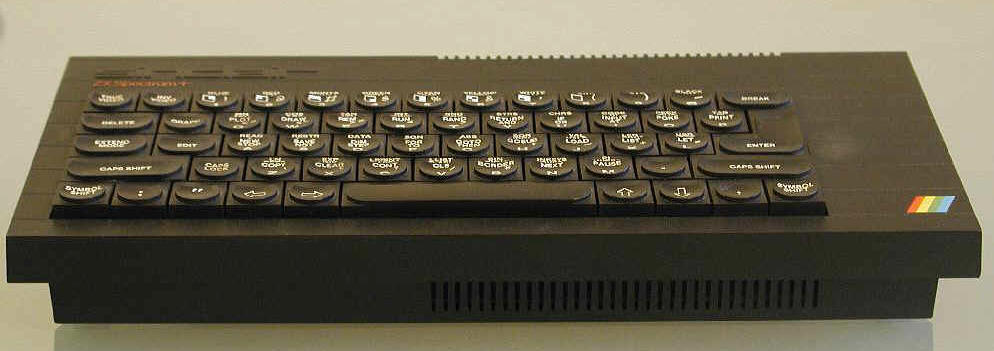
-Computer platforms/OS (Sinclair, Atari 800, Commodore 64, Apple, Mac--OSX, Wintel--Dos, Win 3.1, Win 9x, Win 2k, ME, XP) -Digital media formats (Mpeg 1,2,4,7, avi, wav, aiff, au, wmv, rm, ra, mov, mp3, swf)
-Group response systems (Onetouch, Fleetwood, Group Systems)
-Electronic slides (Presentations, Powerpoint, Astound)
-Synchronous Distance Learning Tele-lectures (satellite, web-based, Internet hi-band--PictureTel, Vtel)
-Video streaming, (broadcast and Interactive w/chat)--(QT, Flash, Real, Windows media, Vivo, Vxtreme, Geo)
-DVD-Video, DV-ROM-web hybrid
-Authoring systems (Authorware, Toolbook, Flash) Multimedia CD
-Avatars, VRML (3d spaces)
-I have helped develop PDA courses (Palm, Pocket PC, Trivantis)
-Massively Multiplayer Online Role-Playing Game (MMORPG, MMOG) (There, Second Life, World of Warcraft)
-I have accounts in the following Social Networtk sites: Facebook, Linked-in, Orkut, Friendster (chose to stay out of MySpace)
-3D rooms (BYU, PSU "caves")
-Variable speed Playback VSP (Enounce)
-Whiteboard, electronic, copyable, projected, pressure sensitive, networked.
-Synchronized media (Mpeg-4, Real, Windows Media, Flash, Director, QT)
-Computer Supported Collaboration technologies (Elluminate, Netmeeting, Centra, Interwise, Webex, HorizonLive-Wimba, Placeware, Paltalk, Groove, Atinav, iChat, and many others)
-Simulations (virtual chemlab)
-Media search (Pictron, Virage, Excaliber, Google video, MediaSite)
-Asset management and digital library products (Bulldog, MediaSite, Jaguar, Content DM, Hyperion, TeleScope, Silver Platter
-Non Linear Editors (NLE) (D/Vision, Avid, Premiere, Toaster, Play, FAST, Final Cut, iMovie, Windows MovieMaker)
-Immersive, networked gaming (World of Warcraft, Delta Force, Doom, Wolfenstein 3D, Pod racer), (Other: Command & Conquer, Age of Empires)
-I have used the following data backup systems: SyQuest (various capacities), Quantum DLT 4000-8000, Iomega
-I am familiar with, and have had (to attempt) to design for SCORM, IMS, AICC compliance (learning objects, media objects)
-I have used the following LMS, CMS and LCMS products: Blackboard, WebCT, Angel, Moodle, NYU Online, Lectora, Topclass, Learningspace, FirstClass, Click2Learn, Avaltus, Playback Media, Skillsoft, Tegrity and others

-I have maintained and/or used Blogs, Wikis, Podcasts, regular html websites

-I have used RSS feeds to distribute and aggragate online content.

-I have posted and shared photos and video online (Flickr, Picasaweb, Googlevideo, YouTube)

Other Technology
-Global Positioning System receiver (GPSr) devices--handheld and automotive from (Lowrance, Garmin, Magellan & Cobra)
-Gestetner, stat machine, mimeograph (still remember the smell of purple acetone), ditto machine, photocopiers
-Word Processor (Word, (Corel)Wordperfect, Apple/Claris works, Star Office Writer)
-Overhead projector, LCD projector
-Post-it sheets (various colors and sizes, easel pads)
-Chalk (dust free, regular, natural) Chalkboards (green, black, brown, handheld slates, wall mounted, painted)

-Typewriter (manual and electric front strikes, and "IBM selectric", with and without correction strips, two-color ribbons)
-I've used Carbon copy paper
-Telex machine, facsimile machine
-PDAs (Palm OS, Pocket PC)

Other Experiences
-Facility design (Sound design, studio design, school design, classroom design)
-I am a Christian, Father, Husband, Son, Grandson, Brother, Neighbor, Friend, Student, Foreigner (Canadian), Teacher, learner.
-White, Male
-I scuba dive (not in years), ski (not very well), snowboard (ok)

-I have attended most of the following (inter)national conferences more than once: NAB (National Association of Broadcasters), IBC (International Broadcasting Convention), TeleCon, Online Learning, ALN (Sloan-C), AERA, AECT, EdMedia, SALT, IDLCON (International Distance Learning Conference) now E-Learning, TechED. _______________________________________

I imagine many of you have had similarly rich experiences with technology and education. The list continues to be added to, and I still need to come up with a better categorization scheme...Any ideas?

-Joel Galbraith

Wednesday, June 27, 2007

Hanging on for the ride...changes in education

Related to a few of my earlier posts, this great presentation addresses why we might embrace, rather than fear the Web 2.o dragon.

The presenter, quotes an Irish university IT director, Michael Nowlan, as saying his mantra is now "Yes before no; allow before disallow; open rather than closed". This could be an approach for any director, designer or educator and is all about letting go of control–-control of content, control of interaction, control of learning, control of power, control of the environment, control of the future.

Yikes! Scarey indeed, but I've been starting to adopt that position myself on a number of decisions already and am starting to feel the anxieties and excitment knowing that the roller coaster has left the station, and there's no turning back now! I do reserve the right to step off the roller coaster at the end of this run, and also make no guarantees that my stomach can handle it (i.e. the experience for some of those closest to me may not be very pleasant).

"Only fools rush in" you say?! Agreed! But for me, I proceed cautiously. This is calculated risk and a move that has already shown early personal benefits.
-Joel G.


(available from:http://www.slideshare.net/lisbk/web-20-opportunity-or-threat-for-it-support-staff)

Thursday, June 14, 2007

New literacies in Education...

I came across another great blog post that addresses this idea of new literacies and basics in education that I've been contemplating lately. The original post is very long, and covers a lot of ground on Moodle as an example. I'm presenting wholesale-size swaths of the original post by Miguel Guhlin because it is done so well--but I want to editorial rights, and don't care too much about moodle right now.
(photo by fotologic)
_________________________________
New Literacies Jun 13, 2007 (yesterday)
from Techlearning blog by Miguel Guhlin

How we read, write, and communicate has changed. This is an earth-shattering truth for people in any walk of life, but even more critical for educators to grasp. It is critical because educators are the ones charged with preparing children for the future. The prevalence of the Internet forces these changes in what our definition of what constitutes literacy in our world today. Moodle, a course management system, can provide a solution that can be used to maximize the impact of new literacies while helping educators survive this 21st Century earthquake.

New literacies include--as defined by Leu, Mallette, Karchmer, and Kara-Soteriou in their 2005 book, Innovative Approaches to Literacy Education-- the following:

...the skills, strategies and dispositions necessary to successfully exploit the rapidly changing ICTs continuously emerging in our world for personal growth, pleasure and work. These new literacies allow us to use the Internet and other iCTs to identify important problems, locate information, analyze the usefulness of that information, synthesize information to solve problems, and communicate the solutions to others.
In addition, citing Bloom's Revised Taxonomy, being able to create using these new literacies is of essence. In fact, it is not enough to be able to evaluate web sites, synthesize information, but important that we able to create and craft compelling narratives--digital stories--that encompass, as George Lucas shares, the "language of images and sound." Text is no longer enough, and new literacies require a level of fluency that teachers today have not yet grasped systemically in K-16 education. For people everywhere, these are defining literacies that must be learned. You either learn them, or risk a profound disconnect from the world.

In fact, many teachers, parents, administrators may be--dramatically--groaning in fear, gnashing their teeth at the need for new literacies. They see that the Internet, as its ubiquity increases, as it becomes an ever-changing tool molding itself to the mind of its users, now forces reading, writing and communication to be as changeable as the technology it is dependent upon.
The connection between reading, writing, communication and new literacies is multi-modal, engaging everyone as learners as a result of its constant, transformative nature. Multiple modalities go beyond traditional ways of communicating--such as pen and paper, keyboard and mouse--to combine old literacies with new ones. This results in increased usability, increased experience that engages learners.

The connection is also multi-directional, involving not just one or two people, but a global community networked together. As Don Tapscott and Anthony D. Williams write in their book Wikinomics, mass collaboration changes everything.' Mass collaboration involves peer production, people partnering together to create content, remix it in ways specific to their situation yet useful to others connected via a worldwide network.

As new technologies emerge, how can any one "new literacy" be used to keep up with another? In other words, how can we use technology to help us keep up with the changes brought about technology?...New literacies require us to better prepare ourselves and our students for a future where survival requires everyday technology use.
_______________________________
Again, this is not my writing, but that of Miguel Guhlin--retrieved Jun 13, 2007 (yesterday) from Techlearning blog. I share his words because he says clearly, what I'm thinking.

-Joel D. Galbraith

Wednesday, June 13, 2007

Sticking to Basics--part 2

A great post related to my earlier "back to basics" post with a couple equally interesting links. The original can be found here .
-Joel G.

Thoughts on “Out of Our Minds: Learning to Be Creative” by Ken RobinsonPublished by Jessica Draper June 13th, 2007 in Shop Talk

Ken Robinson argues in Out of Our Minds: Learning to Be Creative that the world is changing rapidly, due in large part to technological advances, and that the old-fashioned style of “logico-deductive” education simply cannot meet the needs of the rapidly arriving future. The future, in his view, demands a new vision and effective use of human resources—specifically, the urgent need for creativity in all areas of education, culture, and business.
He defines creativity as “imaginative processes with [real-world] outcomes that are original and of value.” This process is the key to thriving amid the rapid and radical changes in modern culture—and the even more rapid and radical changes to come.
Some of these changes have already weakened the traditional view of education and employment; having a university degree is no longer a guarantee of either getting or keeping a job. Employers, he says, “want people who can think intuitively, who are imaginative and innovative, who can communicate well, work in teams and are flexible, adaptable and self-confident. The traditional academic curriculum is simply not designed to produce such people.”
The good news is that anyone can be creative under the right conditions. Robinson argues that creativity is not either/or, not just for certain people or disciplines; instead, “real creativity comes from finding your medium, from being in your element.” It is “a dynamic process that draws on many different areas of a person’s experience and intelligence.” It is also a cultural process, arising “out of our interactions with ideas and achievements of other people.”
So, how can education help train these creative, flexible, innovative people? Robison strongly advocates various reforms (reuniting arts and sciences, abandoning the IQ-based conception of intelligence, and others), but his keys to promoting creativity (in education and in business) are:
Encouraging risk-taking and experimentation.
Creating interdisciplinary associations, breaking down the barrier between art and science.
Harnessing creativity, encouraging and acting on ideas and creative solutions.
Obviously, any of these things is much easier to say than to actually do in the real world. (This is where grand visions in education-reform books tend to founder—it’s harder to come up with specific techniques and recommendations than general principles.)
On the subject of reducing the risks that stifle experimentation, however, a couple of ideas did bubble up as I read the book. They’re based on the question posed in the parable of the fence or the ambulance: do you build a fence at the top of a dangerous cliff, or station an ambulance at the bottom? To reduce the negative consequences of failure as a learner explores a new topic, a combination of techniques seems promising.
First, the fence. When presenting a new subject, reduce the consequences of failure by providing the learners with the background, concepts, and guidelines they need to freely experiment. Nothing is so frustrating as having too wide a field and no idea at all about how to proceed. Giving the learners a defined “sandbox” and the tools to use in it changes confusion into purpose, and wandering into real exploration. Schools that follow Maria Montessori’s methods [http://www.webster.edu/~woolflm/montessori.html] provide just one example of fence-building technique: the children use tools and toys that let them freely explore and experiment, but they conduct those explorations and experiments within precisely defined structures and routines that are set up so that they can correct themselves when they begin to go off track. (For a humorous look at Montessori schools, see The Cult of the Pink Tower by Emily Bazelon.)
Second, the ambulance. If methods for preventing failure don’t work, the failure shouldn’t have such dire consequences that the students are afraid to experiment. Part of decreasing the consequences of failure is changing the focus of assignments and exercises from categorizing students (by score and grade) to assessing whether or not they actually know the material or can do the task—aiming for mastery rather than earning a score. Providing low-stakes, repeatable assignments with frequent, specific feedback, for example, lets students try, learn from their mistakes, and try again without worrying about a single failure permanently marring their academic record.
Of course, making those assessments relevant, interesting, and even fun is another challenge. Sounds like a job for creativity!
To see Ken Robinson talk about education and creativity, watch his speech at TED.

Friday, May 18, 2007

10 Questions for designing media for instruction and learning
  1. What is the educational need, problem or gap for which use of the new media might enhance learning?
  2. Would the application of new media help assess prior knowledge?
  3. Would the application of new media enhance students’ organization of information—given that organization determines retrieval and flexible use?
  4. Would the application of new media actively engage students in purposeful practice that promotes deeper learning or automaticity (where desired). This, so that students focus on underlying principles, theories and models and processes, not superficial features of problems?
  5. Would the application of new media help provide frequent, timely and constructive feedback and guidance?
  6. Would the application of new media help learners develop proficiency they need to acquire new skills of selective monitoring, evaluating and adjusting their learning strategies (Self-regulated learning strategies, or metacognitive skills)?
  7. Would the application of new media adjust to students’ individual differences and increasingly diverse educational backgrounds and abilities?
  8. Would the application of new media increase cost or logistical efficiencies in the instruction?
  9. How would the application of new media promote a learning- or learner-centered instructional approach?
  10. How would the application of new media address motivational or attitudinal aspects of learning?

    Adapted by Joel Galbraith.
    Original source: Joel M. Smith & Susan Ambrose (June 2004). The “Newest Media” and a principled approach to for integrating technology into instruction. Syllabus Magazine

Tuesday, June 21, 2005

I got a question today from a friend asking what the most "innovative teaching methods in higher education" were these days. I had to stop and think, and felt a bit frustrated that I had no quick response. Furthermore, as I asked fellow INSYSers, I got the impression that no-one had a good handle on an answer that didn't sound like we were treading water, and grabbing at straws.

While the answer to that particular question is perhaps not exactly right up our alley, it should certainly be closer/more accessible to us than to our friends in Economics, Engineering or Dance. And certainly a quick response to such a question would be good preparation for oral comps and/or job interviews.

I am not looking for the definitive answers or Truth, but for some thoughtful, but direct, concise and plausible responses to such questions (without the academic-beating-around-the-bush-jargonny type responses we might kick around in class.

Thus I pose my friend's question (and a couple more) to my INSYS colleagues and invite you to reply...for my benefit, and hopefully yours. Thank you.

  1. What are the most "innovative teaching methods in higher education" these days?
  2. What are some innovative (effective) technology uses in higher education these days?
  3. What are some recent (you decide) significant developments/contributions of our field to teaching and learning?

-Joel Galbraith

Creative Commons License
This work is licensed under a Creative Commons Attribution-Noncommercial-Share Alike 3.0 License.